
Section 4. Bilateral water cooperation between the countries of Central Asia
4.1. Bilateral collaboration
4.1.1. Kazakhstan–Kyrgyzstan

High-level contacts
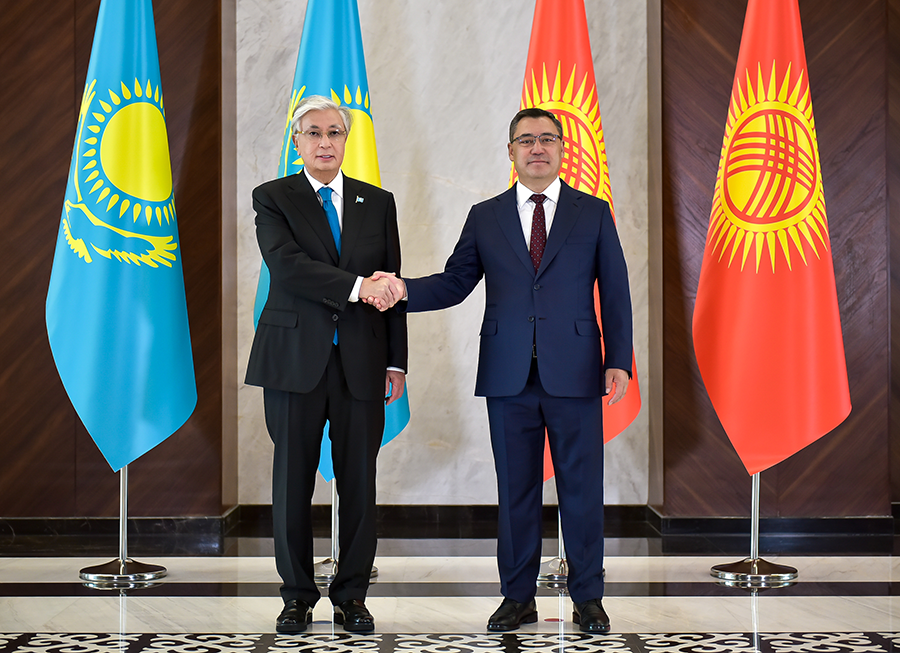
President of Kazakhstan Kassym-Jomart Tokayev held narrow-format talks with President of the Kyrgyz Republic Sadyr Japarov as part of his official visit to Bishkek. Also, the leaders took part in the 7th meeting of the Supreme Interstate Council. The parties discussed issues related to strengthening cooperation in the political, transport and transit, energy, water, agricultural, and digitalization spheres. As a result, several documents were signed, including the Decision of the Supreme Interstate Council approving a comprehensive Cooperation Plan between the Kyrgyz Republic and the Republic of Kazakhstan for 2025–2027 and the Joint Statement by the heads of state. During the visit, the President of Kyrgyzstan was awarded the Order of Altyn Kyran (Bishkek, 21-22 August).
The leaders of states discussed the matters related to strengthening cooperation in trade, economic, investment, cultural, and humanitarian areas during their telephone talks (17 May, 21 March, 24 July, 6 December).
Cooperation within the Chu-Talas Water Commission
The Chu-Talas Water Commission (CTWC or Commission) was established by the Agreement between the Government of Kazakhstan and the Government of Kyrgyzstan on the Use of Water Management Facilities of Intergovernmental Status on the Chu and Talas Rivers to ensure mutually beneficial cooperation (21 January 2000).
Meetings. From 2006 to 2025, the Commission convened 36 meetings. In 2025, 2 meetings were held on regulation of water use: (1) 35th meeting, at which the participants discussed the implementation of schedules water diversion from interstate water sources on the Chu and Talas Rivers, the current status of work completed at the facilities as of April 2025, issues related to Kazakhstan’s shared financing of the operation and maintenance of hydraulic facilities, as well as some other issues. According to the signed Protocol, in the 2025 irrigation season, Kyrgyzstan will transfer 580 Mm3 of water to Kazakhstan: 400 Mm3 from the Talas River and 180 Mm3 from the Chu River (Astana, 24-25 April); (2) at the 36th meeting, the results of the 2025 growing season and the progress of work at facilities of interstate use were reviewed (Bishkek, 26 September).
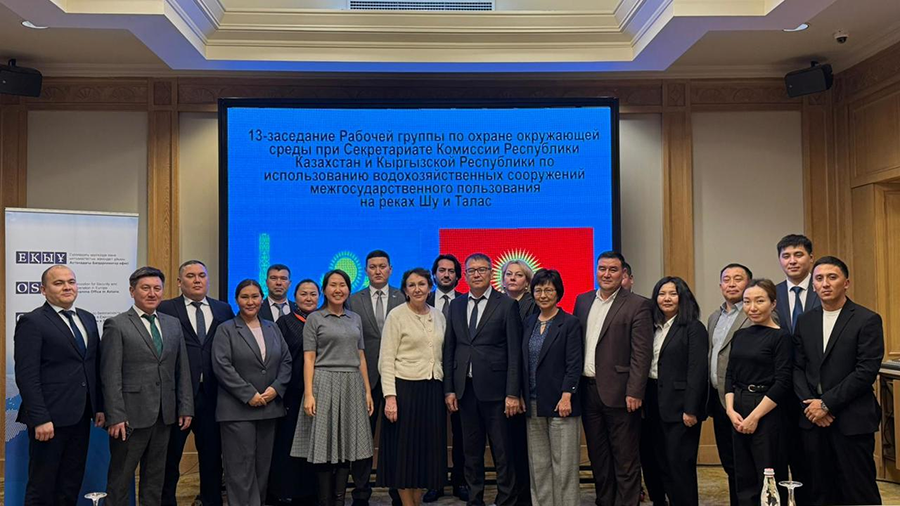
Working Group on Environment Protection (WGEP) under the CTWC Secretariat. At its 13th meeting, the results of hydrometeorological monitoring, water sampling, and water quality analyses were reviewed. Following the meeting, the Commission approved the 2026 Work Plan, including mutually agreed seasonal water sampling, hydrodynamic modeling of flood processes, and environmental education and awareness (Almaty, 5 December).
Other bilateral arrangements
During the 13th meeting of the Kazakhstan–Kyrgyz Intergovernmental Council, the participants reviewed the fulfilment of decisions adopted at the previous meeting and the matters related to mutually beneficial cooperation in energy, water supply, investment, and other areas. Following the meeting, a Protocol was signed (Astana, 13 November).
4.1.2. Kazakhstan–Tajikistan

During the working visit of the President of Kazakhstan to Tajikistan, the heads of state held talks in a restricted format. The presidents underscored the importance of the Treaty on Allied Relations, expressed their intention to intensify the work of the Intergovernmental Commission, and discussed cooperation in energy, industry, investment, green technologies, as well as in the humanitarian, educational, and cultural areas (Dushanbe, 9 October).
Issues related to transboundary water use, trade and economic cooperation, cultural and humanitarian interaction, and further strengthening of Kazakhstan–Tajikistan relations were also discussed during the telephone talks (17 May, 5 October).
Bilateral water-related arrangements
During a meeting between the energy ministers of Kazakhstan and Tajikistan at the Kazakhstan Energy Week-2025 Eurasian Forum, the Kazakhstani party expressed readiness to sign an intergovernmental agreement for electricity supply from Tajikistan's Rogun Hydropower Plant (Astana, 2-4 October).
4.1.3. 4Kazakhstan–Turkmenistan
High-level contacts
During the President of Turkmenistan's state visit to Kazakhstan, negotiations were held in both restricted and substantial formats. The leaders discussed strategic partnership, including the maintenance of peace and security, energy stability, enhancement of transport connectivity, sustainable use of water resources, agro-industrial cooperation, etc. The President of Turkmenistan was awarded the Order of «Altyn Kyran», and the parties signed a Joint Statement. The President also visited the International Center for Artificial Intelligence "Alem.AI". Relevant ministries and agencies of the two countries also signed several documents, including a Memorandum of Understanding between the ministries of agriculture on cooperation in the field of veterinary medicine; a Memorandum of Understanding between the National Agrarian Research and Educational Center of the Ministry of Agriculture RK and the Research Institute of Grain Crops of the Ministry of Agriculture of Turkmenistan (Astana, 24-25 November)
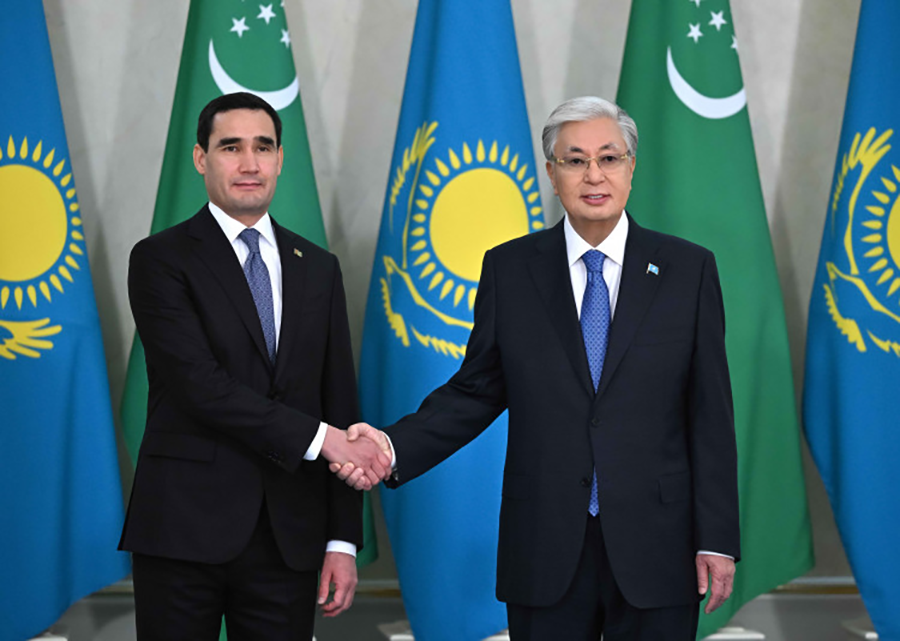
In 2025, the presidents exchanged working visits, during which they addressed the matters related to strengthening economic ties, implementing joint projects in the energy, transport and logistics, and agricultural sectors (Astana, 30 May; Тurkmenbashi, 5 August; Ashgabat, 11 December).
4.1.4. Kazakhstan–Uzbekistan

High-level contacts
During the state visit of the President of Kazakhstan to Uzbekistan, negotiations were held to develop cooperation in the trade and economic, industrial, transport and logistics, energy, agricultural, and water spheres, as well as in the cultural and humanitarian areas. As part of the visit, the 2nd Meeting of the Supreme Interstate Council was held; the President of Kazakhstan was awarded the “Oliy Darajali Dustlik” Order; several joint projects were launched (Tashkent, 14-15 November). The negotiations concluded with the signing of several documents, including the Joint Statement of the Heads of State, decisions of the Supreme Interstate Council on the establishment of the Council of Heads of Regions of Kazakhstan and Uzbekistan, and a bilateral working group for transboundary river flow forecasting. In addition, an Agreement was concluded between the two country governments regarding the joint management and rational use of transboundary water facilities. The Agreement provides for the coordinated operation of interstate water infrastructure, joint monitoring and accident-prevention measures, automation of water accounting and diversion system along transboundary river reaches, with real-time data sharing, as well as the modernization of water infrastructure and adoption of water-saving technologies. To facilitate the implementation of the agreements reached, an Intergovernmental Kazakhstan–Uzbekistan Water Management Commission will be established, with meetings to be held twice a year on an alternating basis in Kazakhstan and Uzbekistan.
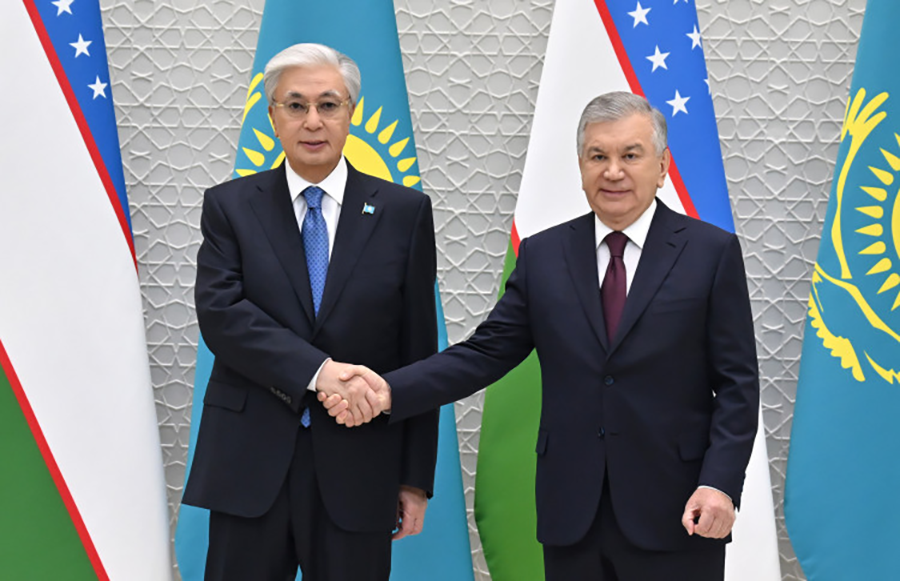
During mutual working visits, the presidents noted the high dynamics of Kazakhstan-Uzbekistan cooperation and confirmed their readiness to further expand mutually beneficial partnership across the entire spectrum of bilateral relations (Almaty, 29 March; Samarkand, 3 April).
During the informal meeting, the presidents discussed prospects for cooperation across all areas, emphasizing their commitment to further strengthening the Kazakh-Uzbek strategic partnership (Almaty, Kazakhstan, 29 March).
During the telephone talks, the heads of state discussed issues on the bilateral and regional agenda, the implementation of previously reached agreements, and the promotion of major projects in trade, industry, energy, transport, agriculture, and other sectors (18 March, 17 May, 24 July).
Kazakh-Uzbek Joint Working Group (Commission) on Environmental Protection and Water Quality in the Syr Darya River Basin
The Commission on Environmental Protection and Water Quality in the Syr Darya River Basin was formed within the framework of the 2017-2019 Strategy for Economic Cooperation between the Government of the Republic of Kazakhstan and the Government of the Republic of Uzbekistan and the Agreement between the Government of the Republic of Kazakhstan and the Government of the Republic of Uzbekistan on Cooperation in the field of Environmental Protection and Management dated 02 June 1997.
Meetings. The 8th meeting of the Commission focused on the execution of the 2025 Work Plan. Particular attention was paid to joint monitoring of water quality on 31 physical and chemical parameters, as well as to joint water sampling at agreed-upon river sections, better data sharing and public environmental control practices. The members of the Commission noted the convergence of water quality analysis results. In addition, the parties positively assessed the results of the inventory of pollution sources and presented monitoring data on individual sources, collectors, and tributaries located in the territories of both countries. An agreement was reached to expand the list of water quality monitoring parameters and to hold a meeting of the Commission in an expanded format with the participation of riparian countries to develop joint project proposals for the improvement of environmental situation in the Syr Darya River Basin. As a result of the meeting, the Commission’s Work Plan for 2026 was approved (Astana, 11 December).
Joint Kazakh-Uzbek Working Group on developing proposals for deepening bilateral water cooperation
Since 2016, 12 meetings of the Working Group have been held. During the 12th meeting, the parties: (1) reviewed progress on the Agreement between the Government of Kazakhstan and the Government of Uzbekistan on joint management and rational use of transboundary water facilities; (2) agreed to take joint measures to ensure a mutually acceptable mode of operation of the Shardara reservoir; (3) were briefed on the establishment of a Joint Working Group to examine the technical condition of a K-25-15 canal section (from DP0+00 to DP62+00) located in Kazakhstan; (4) discussed the issue of automation of water accounting on the Syr Darya River. The parties reached an agreement under which Uzbekistan will provide Kazakhstan with 16 billion m3 of water by 1 October 2025, representing an increase of 1 billion m3 compared to the previous year. Uzbekistan also pledged to ensure a stable water flow through the Dostyk Canal throughout the 2025 irrigation season. The parties will jointly carry out repairs to interstate canals to improve water supply for farmers in Turkistan province of Kazakhstan and Jizzakh province of Uzbekistan (Tashkent, 30 January).
Other bilateral meetings on water-related matters
During the meeting of the energy authorities of Kazakhstan and Uzbekistan a protocol was signed on the supply to Kazakhstan of approximately 900 million kWh of electricity between March and December 2026, to cover the projected shortage in the southern power zone of the country during maintenance works at power plants (Cholpon-Ata, 7 September).
Other bilateral working groups and arrangements
At its 22nd meeting the Joint Intergovernmental Commission on bilateral cooperation addressed the matters related to expansion of trade, economic and investment interaction, industrial cooperation, development of transport and transit links, cooperation in agriculture and energy, as well as in environmental protection and the rational water use (Khiva, 22-23 October).
4.1.5. Kyrgyzstan–Tajikistan
High-level contacts
In 2025, there were mutual state visits between the Republic of Tajikistan and the Republic of Kyrgyzstan. During the visit of the President of Tajikistan to Kyrgyzstan, the development of bilateral cooperation in industry, agriculture, energy, as well as of transport and communication links, and implementation of regional projects, including the CASA-1000 Project, were discussed. Following the substantial negotiations, a package of documents was signed, including a Joint Statement on further strengthening relations of friendship and good-neighborliness, the Treaty between the Republic of Tajikistan and the Kyrgyz Republic on the state border, as well as a series of interagency documents, including Agreement between the Government of the Republic of Tajikistan and the Cabinet of Ministers of the Kyrgyz Republic on ensuring access to water and energy facilities (Bishkek, 12-13 March).
During the visit of the President of Kyrgyzstan to Tajikistan, the heads of state discussed ways to strengthen cooperation in the energy and agricultural sectors and to expand trade, economic, cultural, and humanitarian ties. They also participated in the Tajikistan–Kyrgyzstan Economic Forum. As a result of the visit, several documents were signed, including a Joint Statement by the Heads of state; a Memorandum of Cooperation between the Kyrgyz Agricultural Research Institute under the Ministry of Water Resources, Agriculture and Processing Industry of the Kyrgyz Republic and the Tajik Academy of Agricultural Sciences; and Memorandum of Understanding on cooperation in environmental protection and sustainable development between the Committee for Environmental Protection under the Government of the Republic of Tajikistan and the Ministry of Natural Resources, Ecology and Technical Supervision of the Kyrgyz Republic. A ceremony was held for the virtual opening of the “Tojvaron–Karamyk” crossing point on the state border between the two countries (Dushanbe, 8-9 July).
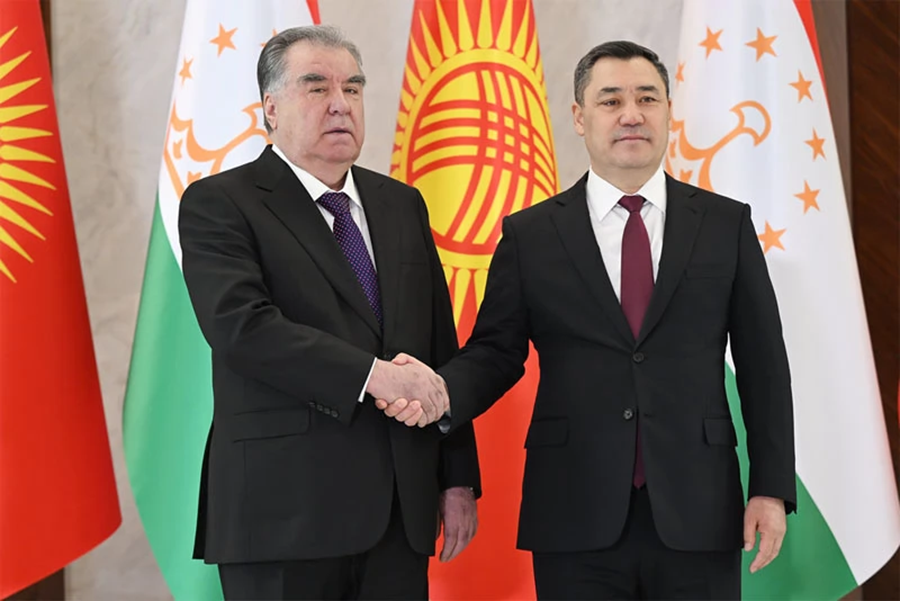
Source: https://eccis.org/en In the course of reciprocal working visits, the heads of state discussed a wide range of issues of bilateral cooperation, including collaboration in the trade and economic, energy, and cultural and humanitarian areas; signed a Protocol on the exchange of ratification instruments of border deal; participated in the launch ceremony of 500 kv «Datka–Sughd» power transmission line, a key component of the CASA-1000 Project (Khujand, 31 March ; Dushanbe, 9 October ); (2) discussed the current and future Kyrgyz-Tajik relations of friendship, good-neighborliness, and cooperation (Cholpon-Ata,29 July).
In the course of telephone talks, the leaders of the two countries discussed current issues of Tajik-Kyrgyz cooperation and further development of bilateral relations in the spirit of good-neighborliness (6 December).
Joint Kyrgyz-Tajik water commission
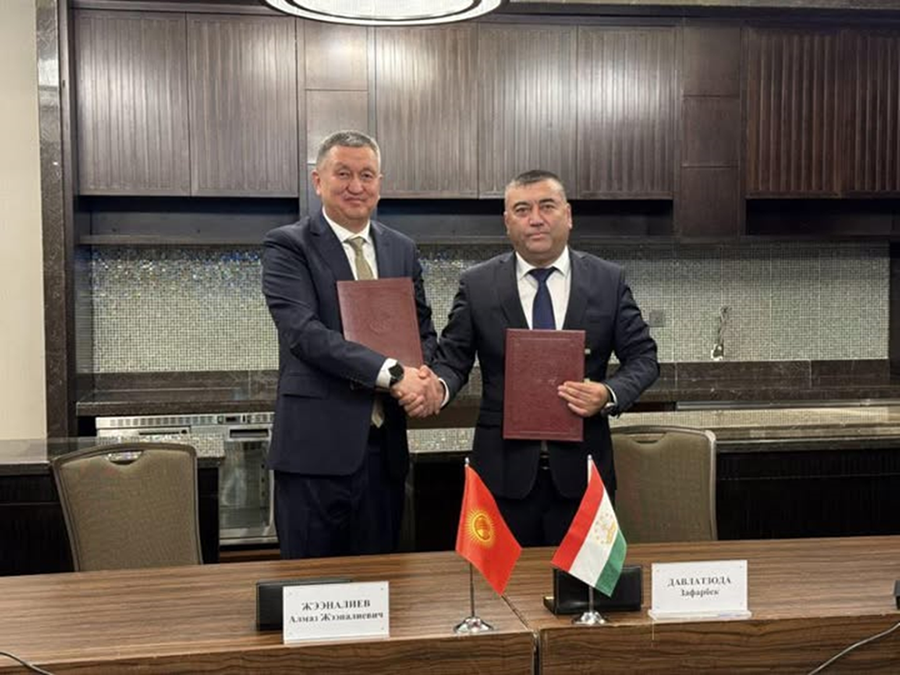
The Commission was established pursuant to Article 10 of the Agreement between the Government of the Republic of Tajikistan and the Cabinet of Ministers of the Kyrgyz Republic on ensuring access to water management and energy facilities (Bishkek, 13 March 2025). It aims to strengthen cooperation in rational water use, ensure access to water and energy facilities, and prevent potential conflicts in water systems management. Meetings are planned to be held twice a year alternately on the territory of both countries.
Meetings. At its first meeting the Commission discussed the draft Charter , attracting investments for the modernization of hydraulic structures in the border areas, ensuring the equitable distribution of water resources, and improving the efficiency of water use (Dushanbe, 9 October).
4.1.6. Kyrgyzstan–Turkmenistan
High-level contacts
During the working visit of the President of Kyrgyzstan to Turkmenistan, topical issues of bilateral cooperation, including the development of energy, transport and logistics cooperation, were discussed; and, readiness to further strengthen strategic cooperation and expand joint initiatives was confirmed (Ashgabat, 11 December).
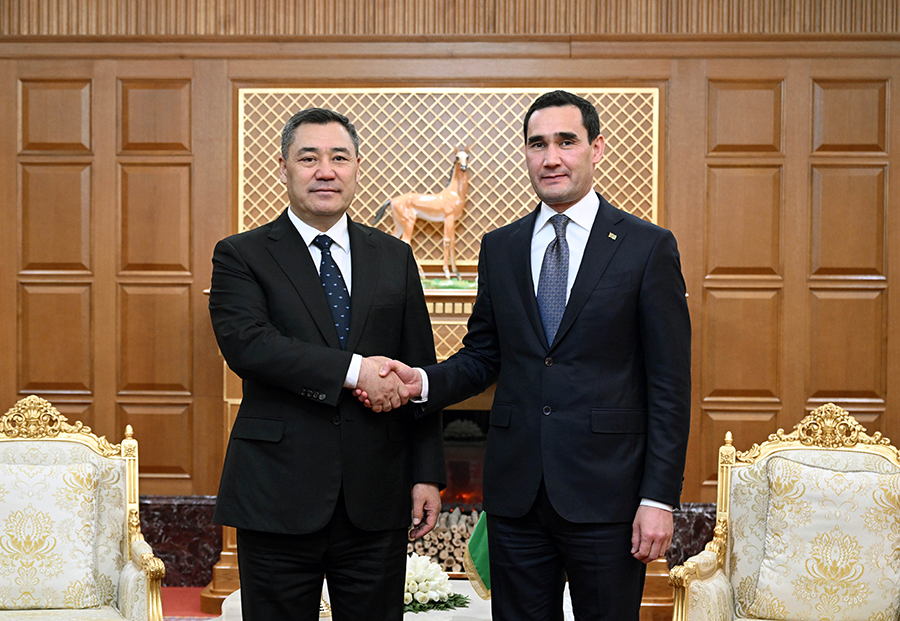
Issues of bilateral cooperation were also discussed by the presidents of the countries during telephone talks (21 March).
4.1.7. Kyrgyzstan–Uzbekistan
High-level contacts
During working visits of the President of Kyrgyzstan to the Republic of Uzbekistan, the leaders discussed the matters related to strengthening Kyrgyz-Uzbek cooperation and implementing the agreements reached, including an increase of mutual trade and acceleration of implementation of priority industry, transport, energy, and infrastructure projects (Samarkand, 3 April; Tashkent, 15 November).
The Presidents of Kyrgyzstan and Uzbekistan held talks during a working visit to the Republic of Tajikistan and discussed issues of bilateral cooperation and topical aspects of the regional agenda (Khujand, 31 March).
Development of Kyrgyz-Uzbek relations in various sectors were also on the agenda of telephone talks between the heads of state (18 March, 21 March, 24 July, 6 December).
Joint water commission
The Joint water commission was established by the Agreement between the Ministry of Water Resources of Uzbekistan and the Water Resources Service at the Ministry of Agriculture of Kyrgyzstan on cooperation (Bishkek, November 3, 2022).
Meetings. In 2025, The Commission had 2 meetings: (1) 6th, at which the agreements on water withdrawal from small rivers of the Fergana Valley and discharges into the Karadarya River for 2025 were approved; the joint use of the Kasan-Say and Andijan reservoirs was discussed; a decision to establish a bilateral working group on the assessment of water use efficiency in transboundary canals was made (Andijan, 12 June); (2) 7th meeting, where the Kyrgyz party came up with initiatives to introduce automated and drip irrigation, create a "Green Belt of Friendship" along the border and develop water and energy cooperation. The parties also discussed major regional projects, such as the construction of the Kambarata-1 HPP and the China-Kyrgyzstan-Uzbekistan railway under China’s Belt and Road Initiative (Manas, 11 November).
Bilateral water-related arrangements
During the meeting between the government delegations of Uzbekistan and Kyrgyzstan, the projected alignment of the Kyrgyz-Uzbek state border was approved, confirming the Chashma spring to remain within Kyrgyz territory. The parties also agreed on key provisions of the draft intergovernmental agreement on its shared use. An agreement was reached to ensure Uzbek citizens have guaranteed unrestricted access to the spring, with the right to use two-thirds of its water, and prior coordination with the Uzbek party of any actions that could affect water quantity or quality. Following the negotiations, a Protocol was signed (Tashkent, 24 April).
4.1.8. Tajikistan–Turkmenistan
High-level contacts
In 2025, the presidents of the countries exchanged working visits, confirming their readiness to further strengthen cooperation on a mutually beneficial basis, with an emphasis on trade, economic and investment, energy, industry and agriculture, transport and communication, and "green" development cooperation. Interest in establishing joint ventures, increasing exports, and expanding cultural and humanitarian ties was noted (Dushanbe, 9 October; Тurkmenbashi, 5 August, and Ashgabat, 11 December).
Bilateral meetings
The issues on strengthening energy cooperation were addressed at the meeting of the Minister of Energy and Water Resources of the Republic of Tajikistan with the Ambassador Extraordinary and Plenipotentiary of Turkmenistan to the Republic of Tajikistan (Dushanbe, 26 November).
4.1.9. Tajikistan–Uzbekistan
High-level contacts
During the working visits, the Presidents of Tajikistan and Uzbekistan reaffirmed their commitment to further strengthening the strategic partnership and alliance, as well as expanding trade and economic cooperation in the field of energy, industry, water and agriculture, and innovative and green technologies. During the meeting in March, the parties signed a Protocol on the Exchange of Ratification Instruments of the Treaty between the Republic of Tajikistan and the Republic of Uzbekistan on Allied Relations (Khujand, 31 March; Samarkand, 3 April; Dushanbe, 9 October; Таshkent, 15-16 November).
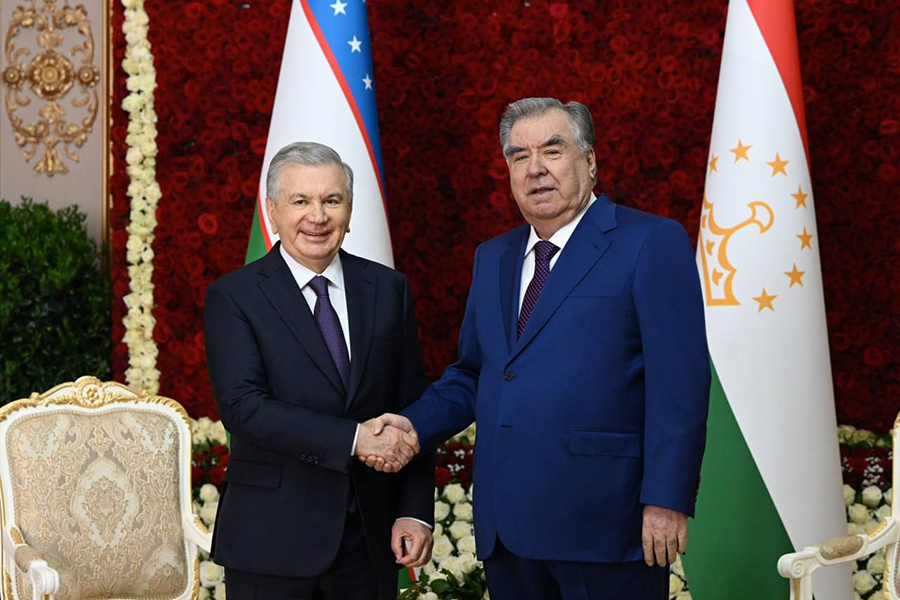
Further expansion of Tajik-Uzbek relations and cooperation, and the implementation of cooperation projects in trade, investment, industry, energy, agriculture, and other priority areas were discussed by the heads of state in the course of telephone talks (18 March, 24 July, 5 October).
Bilateral working groups
At its 12th meeting the Intergovernmental Commission on Trade and Economic Cooperation between Tajikistan and Uzbekistan discussed the ways to expand cooperation in trade, investment, transport, energy, industry and agriculture. As a result, a Protocol was signed (Khiva, 16 April).
4.1.10. Turkmenistan–Uzbekistan
High-level contacts
During the state visit of the President of Turkmenistan to Uzbekistan, the heads of state held talks on strengthening cooperation in priority areas and took part in the оnline launch of the cross- border trade zone "Shavat-Dashoguz». As a result of the visit, the heads of state signed a Joint Statement and several interagency documents, including: Agreement on further development of agricultural cooperation, Roadmap for forestry cooperation for 2026-2030 between the Ministry of Environmental Protection of Turkmenistan and the Ministry of Ecology, Environmental Protection and Climate Change of the Republic of Uzbekistan. The ceremony of awarding the President of Turkmenistan the “Oliy Darajali Dustlik” Order was also held (Tashkent, 16-17 November).
As part of mutual working visits, the heads of state discussed further expansion of Turkmen-Uzbek relations, strategic partnership, friendship and good-neighborliness in the political, inter-parliamentary, trade, economic, cultural and humanitarian spheres (Samarkand, 3 April; Ashgabat, 5 August, 11-12 December).
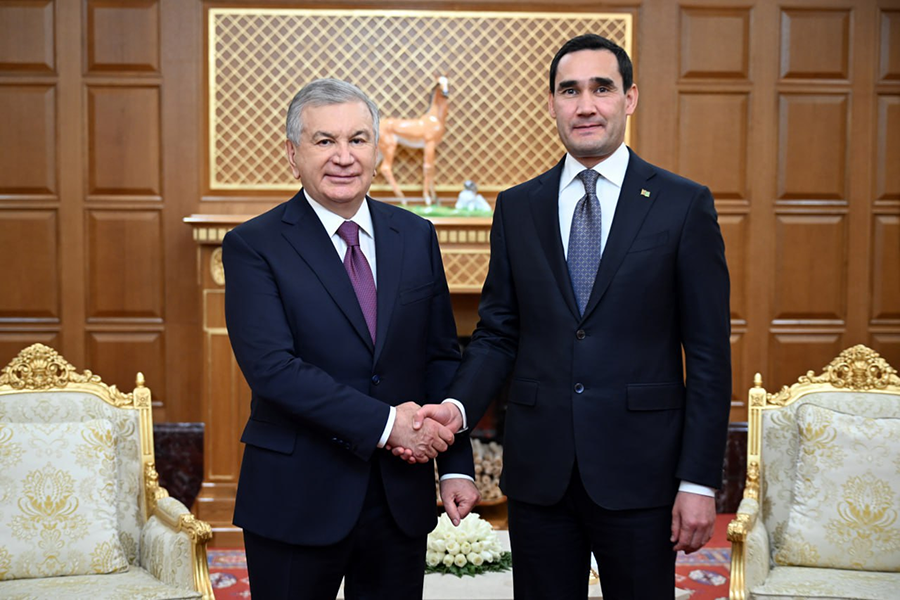
In the course of telephone talks, the leaders discussed further development of the strategic partnership, deepening cooperation in the energy, transport, and agriculture sectors, and possible expansion of mutually beneficial cooperation in Central Asia (24 July, 22 September).
Bilateral Commission on water (management) issues
The Bilateral Commission was established by the respective Agreement between the Government of Uzbekistan and the Government of Turkmenistan on the joint Uzbek-Turkmen intergovernmental commission on water issues (Ashgabat, 26 May, 2021).
Meetings. As of January 1, 2026, the Commission held 5 meetings. At the 5th meeting, the Commission addressed the matters related to operation and modernization of water facilities, flood control and bank protection works on the Amu Darya River, and rational use of water. The parties agreed on further steps to implement the arrangements of the 4th meeting, including joint research, knowledge sharing on water-saving technologies, digitalization of water management, and water management. The participants visited the facilities of the Tuyamuyun hydroscheme and discussed measures of its effective operation (Turkmenabad, 13-14 March).
Commission on water allocation in the Amu Darya lower reaches
Water cooperation between Uzbekistan and Turkmenistan is also facilitated through the Commission on water allocation in the Amu Darya lower reaches, which incorporates the BWO Amu Darya. As of January 1, 2026, the Commission has held 285 meetings, including 16 sessions conducted in 2025.
Bilateral working meetings
The ministers of energy of Uzbekistan and Turkmenistan discussed ways to further strengthen bilateral energy cooperation and confirmed their commitment to the joint implementation of projects in the energy sector. (Tashkent, 18 November).
4.2. Multilateral Cooperation
4.2.1. Summit of the leaders of Kyrgyzstan, Tajikistan, and Uzbekistan
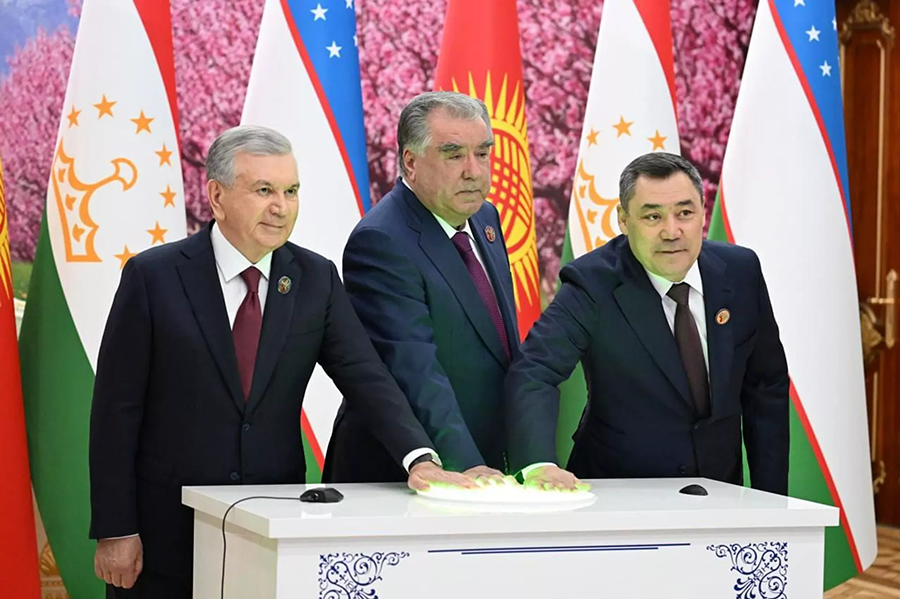
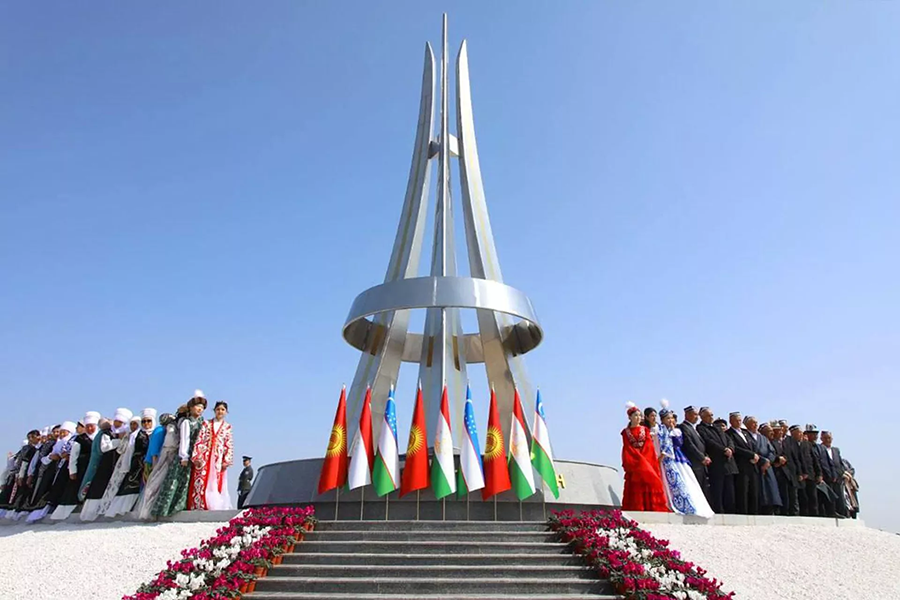
During the trilateral talks, the leaders of state addressed topical issues of regional cooperation, stressing the importance of strengthening good-unneighborly relations and joint implementation of infrastructure and economic projects. Following the meeting, the Treaty on the Junction Point of the State Borders of the three countries and the Khujand Declaration on Eternal Friendship were signed (Kuhjand, 31 March).
4.2.2. Тrilateral water-related arrangements (Kazakhstan-Kyrgyzstan-Uzbekistan)
In the course of the year, country water and energy ministers had a series of meetings in the following key areas:
(1) water and energy coordination in the Syr Darya River Basin (Tashkent, 27 January; Tashkent, 14 May; Cholpon-Ata, 7 September; Almaty, 21-22 November). In addition, the following issues were addressed: ensuring stable operation of the water-energy system of the three countries; operation of energy facilities and water allocation procedure in the Basin; commitments of the parties concerning electricity deliveries from Kazakhstan and Uzbekistan to Kyrgyzstan during autumn–winter period to store and use efficiently water in the Toktogul reservoir; water releases from the Toktogul reservoir during the growing season to Kazakhstan and Uzbekistan for irrigation of agricultural lands in the southern regions; joint measures to reduce energy consumption and energy conservation in the region.
Conditions for the transit of electricity from Russia to Kyrgyzstan through the energy system of Kazakhstan and from Turkmenistan to Kyrgyzstan through the energy system of Uzbekistan were agreed; the Bilateral Protocol on the Supply of Electricity between Kyrgyzstan and Kazakhstan and the trilateral protocols fixing the volume of winter supply of electricity and water storage for the 2026 growing season were signed.
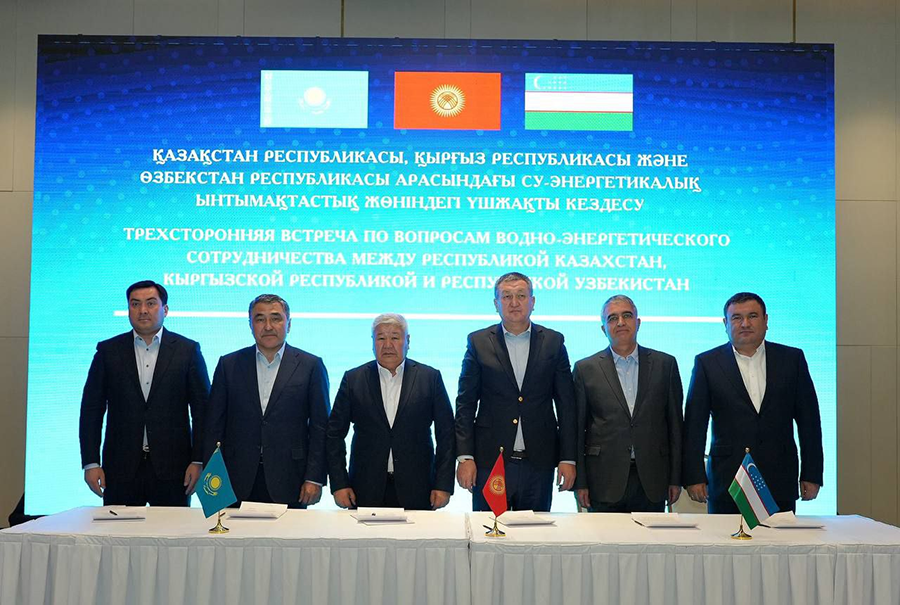
(2) implementation of the Kambarata-1 HPP project (Tashkent, Uzbekistan, 27 January; Dubai, UAE, 26-27 May; Bishkek, 18-19 June; Brussels, Belgium, 25-26 September; Istanbul, Turkey, 4-5 November). The parties discussed the draft Roadmap outlining the stages for mobilizing financing, the project implementation mechanisms, and the updated Feasibility Study (FS); the environmental and social impact assessment documents, etc.
4.2.3. Trilateral water-related arrangements (Kazakhstan-Tajikistan-Uzbekistan)
Water and energy ministers of the countries had several meetings, during which the parties:
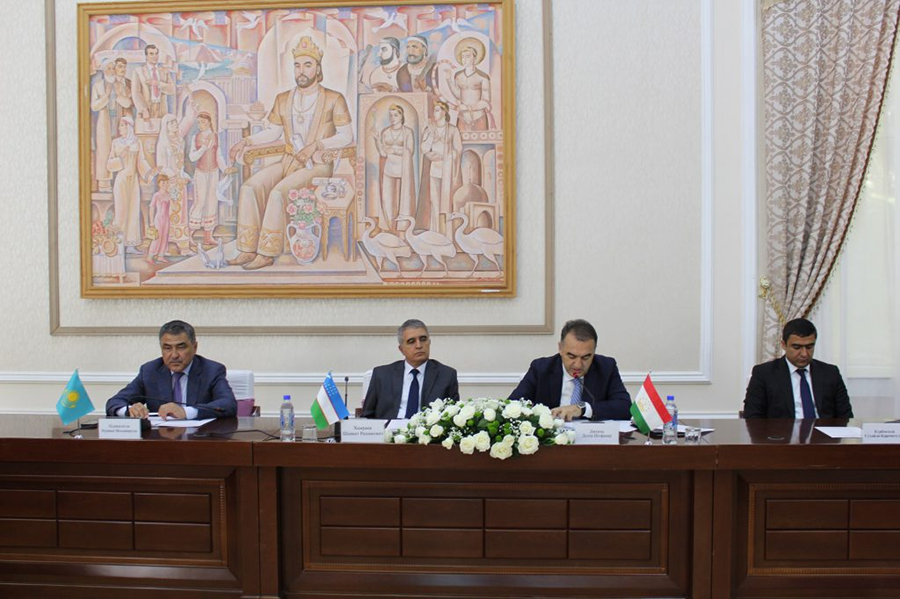
(1) addressed the key areas of trilateral water cooperation, agreed on joint operation of the Bahri Tojik reservoir between June and August 2025. The reached agreements were formalized in a trilateral protocol providing for the operation of the reservoir with due consideration of the interests of all parties (Dushanbe, 30 May) ;
(2) discussed the issues of regional cooperation on the use of the Syr Darya River Basin water resources, the progress in implementation of the earlier signed protocol on summer operation of the Bahri Tojik reservoir, and measures to enhance the water use efficiency. Upon completion of the meeting, the participants visited the reservoir and learned about the operation of the Somgor-1 Pumping Station (Gulistan, 1 August);
(3) visited the Somgor-1 and Khodjabakirgan-1 pumping stations (Bobojon Gafurov district), Markham Pumping Station (Kanibadam city), and discussed issues of their modernization (Soghd region, Tajikistan, 2 August).
4.2.4. Regional Working Group on Water Quality (RWG-WQ)
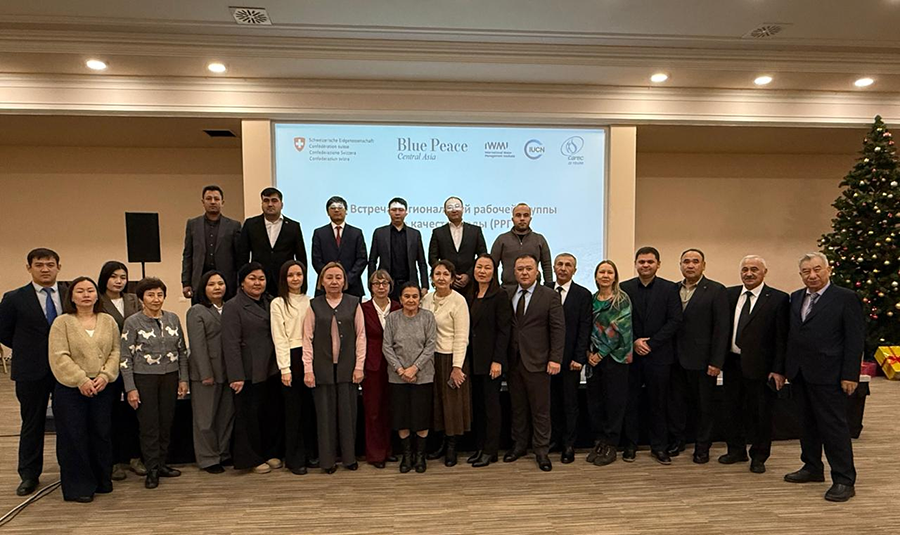
RWG-WQ was established in 2009-2012 with the support of UNECE and CAREC as part of the “Water Quality in Central Asia” project. It includes representatives of relevant agencies from five countries in the region. In 2016-2018, its activities continued under the UNECE and CAREC Project “Strengthening cooperation on water quality management in Central Asia”, with the financial support from the FinWaterWEI Program (see 2019, 2020 Yearbooks, United Nations and its Specialized Agencies). From 2019 to 2025, RWG-WQ held 7 meetings with the support of «Blue Peace Central Asia»/ВРСА (SDC).
In 2025, at the regular meeting of RWG-WQ, experts from the participating countries provided an overview of national surface water monitoring systems in Kyrgyzstan, Tajikistan, and Turkmenistan, presenting updates on institutional reforms and recent legislative developments. The participants agreed to explore establishing a permanent composition of the RWG-WQ and tentatively identified two priority areas for future work: development of a flexible methodology for water quality monitoring and assessment and promotion of technologies and approaches to reduce pressure on water. During the meeting, the strategic vision of RWG-WQ was discussed; the RWG-WQ Action Plan for 2026-2029 was approved, and the BPCA Work Plan on water quality for 2026 implemented by CAREC and RWG-WQ was adopted. A separate session dedicated to international projects was held as well (Astana, 10 December).
4.2.5. Regional Working Group (RWG) on a mutually beneficial mechanism for water and energy cooperation under the Green Central Asia Initiative
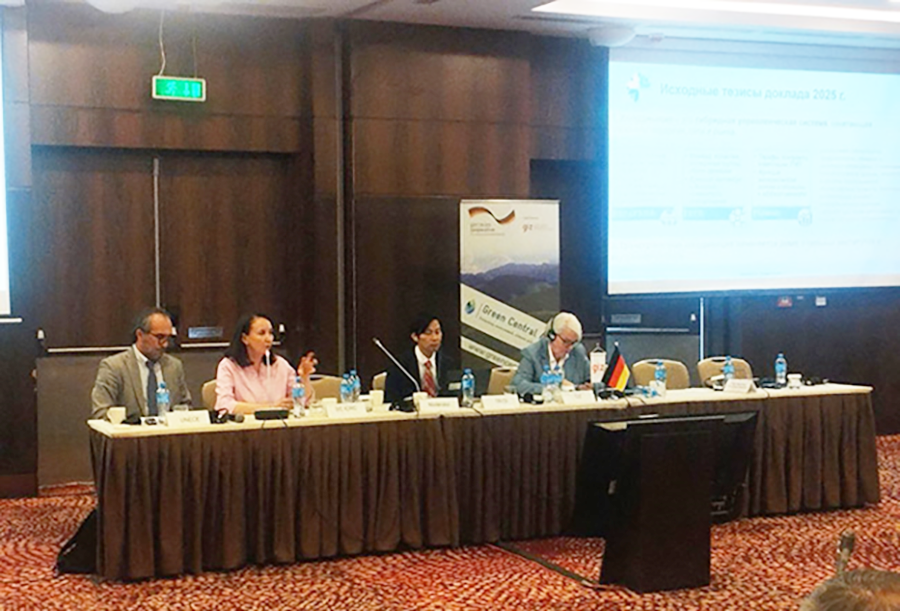
The purpose of RWG is to promote dialogue between Central Asian countries to enhance cooperation for more efficient and sustainable management of water and energy resources. As of January 1, 2026, RWG held 5 meetings under the Green Central Asia Program and the IKI project «Regional Mechanisms for a Low-Carbon and Climate-Resilient Transformation of the Energy-Water-Land Nexus in Central Asia» implemented by OECD, SIC ICWC, and UNECE, with the financial support of the German Federal Ministry for Economic Cooperation and Development (BMZ).
In 2025, 2 meetings were held: (1) 4th meeting, which addressed modelling for the joint management of water and energy resources, ensuring environmental sustainability in the context of water-energy cooperation, the impact of ongoing developments in Afghanistan on the region, as well as opportunities for improving institutional mechanisms of water-energy coordination (Astana, 10 July); (2) 5th meeting, which focused on reviewing various modelling approaches that could support countries in developing mutually beneficial cooperation mechanisms and informed decision-making. A catalogue of models and other forecasting tools was developed (Tashkent, 4 December). The next meeting of RWG is scheduled to take place in Dushanbe in 2026.
Source: SIC ICWC
4.2.6. Regional Working Group (RWG) on the implementation of the Regional Climate Change Adaptation Strategy for Central Asia
RWG is the primary mechanism for the implementation of the Regional Climate Change Adaptation Strategy for Central Asia (RCCAS/CA) developed by the Central Asian countries with the support of the Green Central Asia Initiative. As of January 1, 2026, 5 meetings of the RWG were held (in 2024: Almaty, 27 May ; Tashkent, 25 July; Bishkek, 29 November; in 2025: Ashgabat, 14 May ; Dushanbe, 27-28 November).
Methodological approaches to developing a plan for RCCAS/CA implementation were discussed in Ashgabat. A preliminary assessment of the current situation and the development of a roadmap for regional climate financing mobilization were discussed at the meeting. Participants also reviewed the progress in the Strategy implementation and explored opportunities for new partnerships. In Dushanbe, the implementation of the Strategy in 2024–2025 was reviewed across its key areas of work. Participants discussed the draft framework of the Implementation Plan, proposals from the member states on future functioning of the Secretariat, and assessed the available financing mechanisms. Development partners also presented information on ongoing regional initiatives.
Development and support
Scientific-Information Center ICWC